The Discipline of Authentic Movement
A community for movement, witnessing, healing and spiritual practice
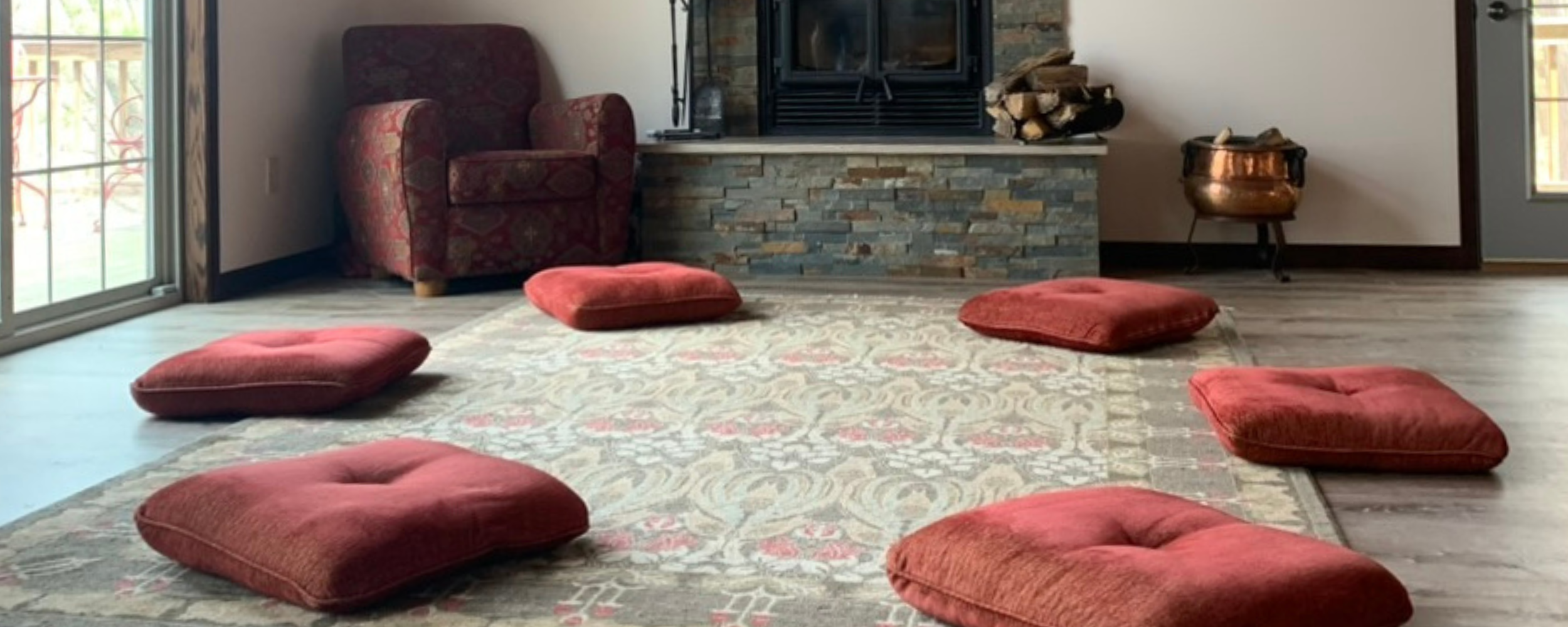
My Authentic Movement retreat space in Central Wisconsin
What is the Discipline of Authentic Movement?
The ground form of The Discipline of Authentic Movement is an embodied awareness practice in which a person with eyes closed follows their inner impulses to move, be still, and explore space, sounds, images, memories or sensations while another actively and non-judgementally witnesses the experience. After moving, there is time for sharing and integrating the experience through speaking and listening together. The witness offers to the mover the experience of being seen and understood.
The discipline has roots in dance, healing and many spiritual traditions, and was refined over five decades by my teacher Janet Adler, whose lineage I have been teaching and practicing for over 20 years. The discipline is open to anyone interested in developing and coming into intimate relationship with their inner witness, the clear and compassionate consciousness inside all of us.
“May the quality of consciousness that is emerging collectively within our world outweigh the quantity of unconsciousness that suffers on our planet. May all suffering become compassion. May we be ready, may we be able.” — Janet Adler, Discipline of Authentic Movement, Founder
The roles of the mover and the witness
The Discipline of Authentic Movement practice is the relationship between a mover and a witness.
During the practice, the mover closes their eyes and in silence follows an inner impulse to move, stretch, discover what feels good to move or be still. The mover may explore the inner landscape of sensation, imagery, emotion and energetic phenomena.
The witness sits with eyes open, holding the container of the room and the mover, actively tracking the mover’s journey, while simultaneously staying present with their own inner experience. The witness non judgmentally brings presence to the mover and recognizes when their own parts or projections arrive in their awareness. Internally these parts are noted and contained allowing them to stay present for the mover.
A speaking and listening ritual follows the moving and witnessing. The mover speaks first, recalling and locating their experience in the journey of their body’s movement, its shape,and accompanying thoughts, images, sensations, memories and can include awareness of the space and the witness. If permission is granted, the witness responds by articulating what they saw and how they were impacted in service of the mover.
The relationship between the mover and the witness offers the mover the feeling of being seen and understood by another, making it possible for them to see themselves more clearly and with compassion. As compassion increases internally so does our ability to offer compassion to others and the world.
The collective body
In my group practices, multiple people move simultaneously and are witnessed by one or more people who have studied the practice of speaking witnessing with a teacher over time. In the collective we are invited to know about ourselves in new and different ways. We study which parts of us are brought forward when there are others interacting in the same movement space who may be carrying different energy and work. The edges of taking up space, being a bother, being “too much” wanting contact, not wanting contact, can all be explored and moved.
The speaking and listening ritual begins the same way, with the mover speaking first about their experience and the witness offering a response in alignment with what the mover spoke about. One difference may be that the larger collective enters into the movers' awareness. Shared experiences are named and movers begin to discover together more about their own experiences as they hear each other. It becomes apparent in the sharing, the relationship between the movers.
At the end of the speaking and listening ritual after every mover has been able to speak about their journey, we also invite collective witnessing. During collective witnessing, anyone in the group can articulate what is ready to be spoken about their experience, and how what was shared by other movers and witnesses resonated with them. This dynamic honors the individual, giving each of us a more intimate, compassionate view of ourselves in the presence of others, while also illuminating our interdependence.
Over time, movers may wish to become witnesses to other movers and expanded circles of practice can form.
Learn more about all of my Discipline of Authentic Movement offerings.
The benefits of the Discipline of Authentic Movement
Deepens self-awareness by listening to the wisdom of the body, making it possible to process anxiety, depression and relationship challenges at the pace the body can safely hold.
Promotes emotional healing through the integration of body, mind and spirit, rather than only speaking about the experience.
Cultivates self-compassion through gentle, nonjudgmental self-exploration, including reflective journaling, speaking and thoughtful witnessing.
Strengthens self-trust and intuition by following the body's inner guidance and impulses, and finding words that emerge from direct experience.
Clarifies decision-making by connecting with one's authentic internal compass.
Reveals unconscious patterns and supports more conscious, intentional choices.
Transforms inner conflict into greater wholeness and integration.
Encourages lasting personal growth by allowing meaningful change to emerge naturally over time.
Fosters connection, presence and belonging through compassionate witnessing and community.
Connection with a higher power and energetic phenomena is also part of the experience for many movers.
The Discipline also cultivates a relationship with the ineffable and unknowable, trusting what emerges in the sessions.
People come from many different spiritual paths and find a place in this practice to embody their particular faiths and beliefs without judgement or elevation.
Frequently asked questions
-
Each session follows a simple structure that creates both freedom and safety. We begin with a brief centering practice to help you settle into the space and connect with your body and breath. After sharing eye contact and establishing the mover and witness relationship, a chime signals the beginning of the movement period, which typically lasts between 20–30 minutes. With your eyes closed, you allow movement to arise naturally from within, while your witness remains quietly present. When the closing chime sounds, you are given plenty of time to return to the room before opening your eyes. The experience is then integrated through journaling, drawing or quiet reflection. Finally, the mover and witness engage in a compassionate dialogue where the mover shares their experience first, followed by the witness's accompaniment. This process helps deepen awareness and allows insights from the movement to become more fully understood.
-
No, the Discipline of Authentic Movement is not a dance class or performance. There is no choreography, music, or expectation to move in a certain way. Instead, you close your eyes and listen to your body's natural impulses, allowing movement to emerge from within. You may move expansively, remain still or anything in between. Without external direction, you are free to discover your own inner rhythms, intuition and authentic expression.
-
The witness plays an essential role in the session by creating a nonjudgmental presence that supports the mover's exploration. Throughout the movement period, the witness remains attentive without directing, interpreting or attempting to change what unfolds. Their role is not to evaluate or analyze but simply to see and accompany the mover with curiosity, respect and care. After the movement, the witness shares observations using "I" statements such as, "I notice..." or "I am aware of..." rather than making assumptions about what the movement means. This approach allows the mover to remain the authority on their own experience. Feeling genuinely seen without judgment often creates a profound sense of safety and acceptance. The witness's presence becomes a container that helps the mover develop greater self-awareness, self-trust and compassion while discovering their own meaning from the experience.
-
The Discipline of Authentic Movement is for anyone interested in self-discovery, creativity, mindfulness, healing or a spiritual practice. No dance experience or special physical ability is required. The practice welcomes people of all ages and backgrounds because it is based on listening to your own body rather than performing. It is practiced by individuals seeking personal growth and is also widely used within dance/movement therapy and other healing professions.