My journey
Dance became my prayer
My interest in what I would call wholehearted living, along with how to hold and be in relationship with suffering, began when I was a child with an undiagnosed hearing deficit. I had many symptoms associated with hearing loss such as an acute startle response to high or low-pitched sounds along with sensory integration issues.
As a young girl, the discovery of dance was a way to move beyond the confusion, isolation and frustration of not hearing well. I had many memories of dancing in my living room after school or at the chapel in the woods in northern Wisconsin at summer camps when I was a young adolescent. Dancing calmed my thoughts, released tension in my body, and bridged difficulties connecting to language and people.
Hearing challenges developed my ability to read facial affect and body posture along with listening for vocal tones in language. I developed an acute awareness of body sensation in myself in relationship to what I was reading in others. These skills served me, and continue to serve me, as I later moved into my career as a dance/movement therapist. I first heard about dance/movement therapy (DMT) in high school in a child developmental class. From then, it was my intention to know more how dance and healing could be woven together in a way that was helpful to others as it had been for me. I earned my Bachelor of Arts in Dance and Psychology at Denison University, after which I studied Dance and Dance Therapy at Harvard University.
In the late 1980s, I studied DMT and received my Master’s Degree at Columbia College Chicago. DMT is, as I practice it, an approach to healing that uses movement and words to express sensations, images, thoughts and feelings as they arise in the therapy sessions. Early in my training I worked with older adults and autistic children who had difficulties that were not uncommon to my own with hearing and sensory sensitivities. In 1989, I produced a video on dance movement therapy that was used to convince the US Congress to include dance therapy in the Older Americans Act.
Finding verbal expression through the Internal Family Systems model
I first encountered Internal Family Systems (IFS) through my mentor and teacher, Barbara Cargill. She introduced me to Richard Schwartz, the creator of IFS, through a workshop where I witnessed him in a demo, listening carefully with compassion to the participant’s inner conflicts and suffering. He then guided the participant to unburdening a wound from the past and helped them to bring in qualities that helped them to transform the part in the present moment. His gentle curiosity and accompaniment mirrored how I prefer to accompany clients. His approach illuminated the wisdom within each of us, empowering his clients to make self-led transformations.
I obtained post-graduate training at the Family Institute at Northwestern University in the IFS model soon after, and am IFS-certified and a IFSI clinical consultant for other IFS therapists training toward certification. IFS interventions invite a way for body-based practices to enhance healing and vice versa. The theory complements my training as a dance/movement therapist because it provides me with a system within which to verbally assess and understand what I am witnessing in my clients through movement. Like my other modalities, IFS transfers leadership to the client whenever possible.
Weaving together the Discipline of Authentic Movement and embodied IFS
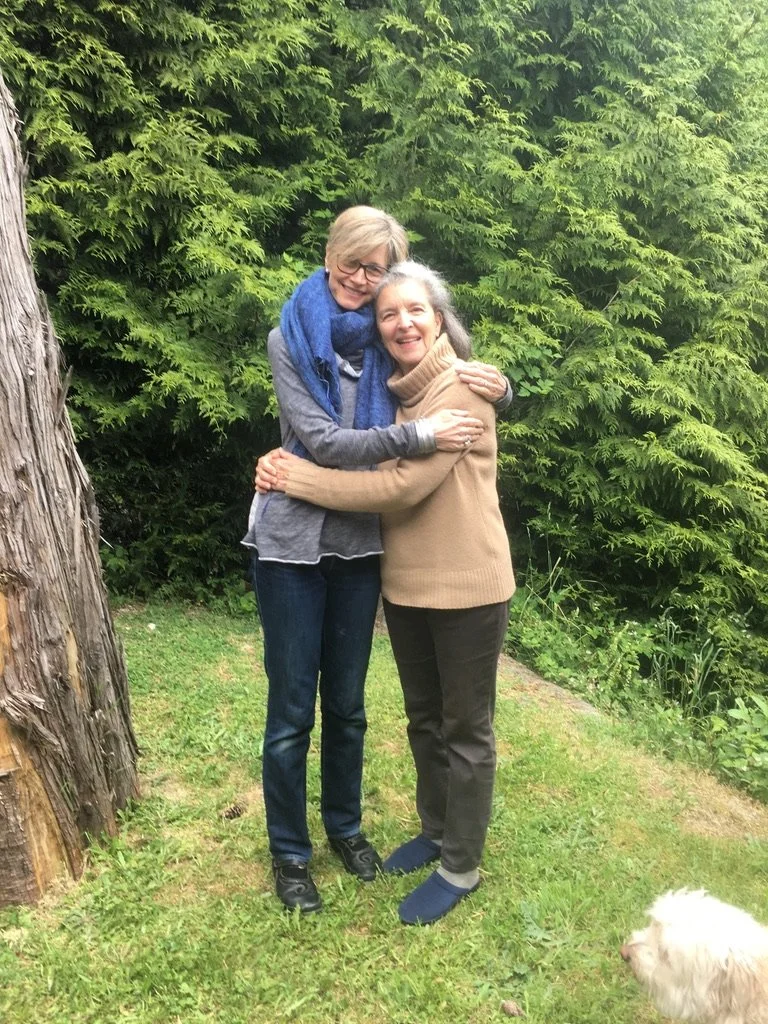
My teacher Janet Adler and I
In and after graduate school, I was also introduced to Authentic Movement by Cargill, and others including Joan Chodorow, Tina Stromsted, Daphne Lowell and Alton Wassen. I began teaching and applying Authentic Movement in my clinical work beginning in 1989.
In 2004, I began studying in depth with Janet Adler, the creator of the Discipline of Authentic Movement. Once I met Adler, I felt the transmission of her clarity, presence and accompaniment, and knew I would continue to devote my life to this practice.
I had the privilege of assisting Adler in her five-year International Internship Program, which later became the faculty of teachers, Circles of Four. Since the inception of Circles of Four, I have been a primary, retreat and supervision teacher.
As my practice has evolved, IFS and the DIscipline of Authentic Movement have become the two enduring pillars. I have traveled nationally and internationally presenting on topics weaving them together, for therapists wanting to integrate IFS or the Discipline of Authentic Movement into their practices for both self-care and for the benefit of their clients and students.
Today, my private practice, consultations, workshops and retreats reflect the lessons of embodied healing and benevolent accompaniment that have been passed down to me through my many teachers. My purpose is to teach, to move and to share in a way that creates true presence for my students and fosters embodied community.
On a personal note, I feel most alive out in nature with those I love—including my dogs, like my Goldendoodle Lucy, who often joins me at retreats and sessions. I also have an adult son, and watching him move through this chapter of his life with my daughter-in-law brings me so much joy. I feel lucky to travel through life alongside such wonderful family, friends, colleagues and clients.
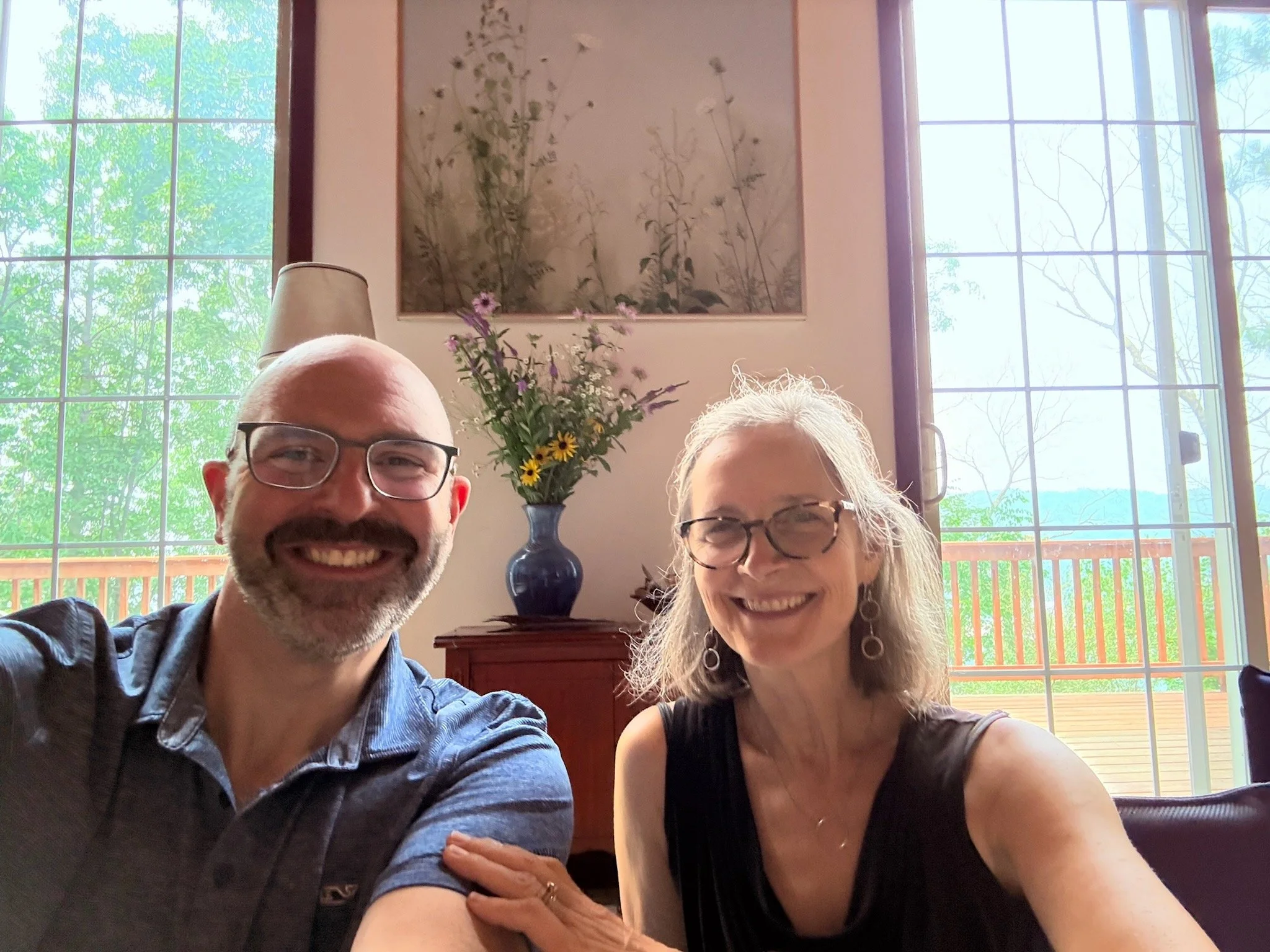
My colleague, assistant and friend Michael Kocher
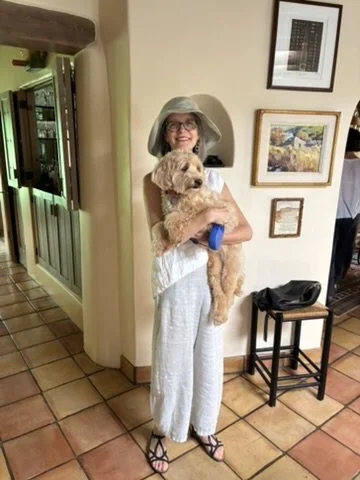
My Goldendoodle Lucy and I
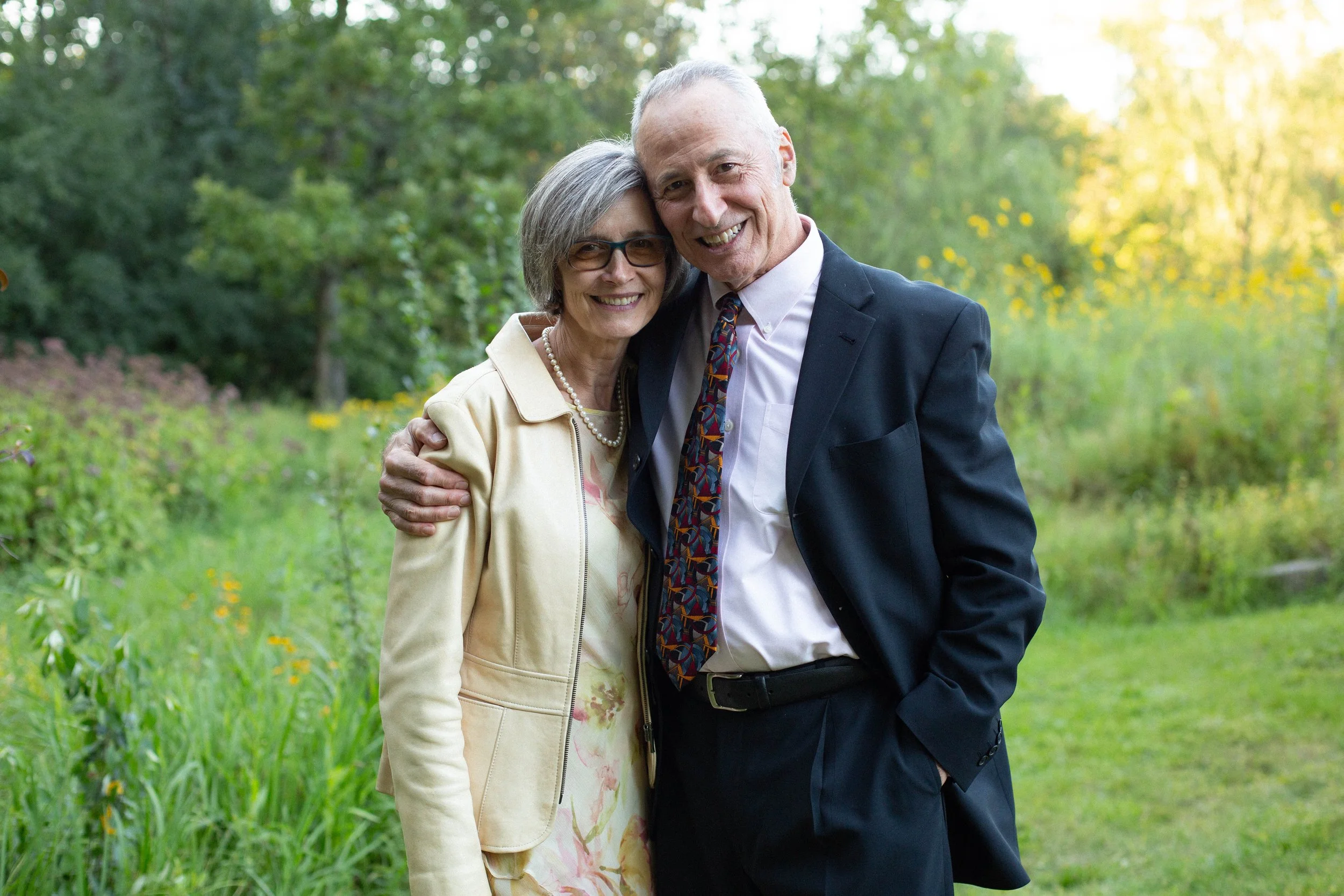
My husband Brian and I the day of my son’s wedding